The numbers
Specifications
What the anti-rebound ribs are
MS describes nervures internes spécialement étudiées pour limiter le rebond, internal ribs designed to limit rebound and recoil, and calls the structure patented. They sit inside the boule rather than on the surface.
Most makers control rebound through hardness alone. MS pairs 115 kg/mm2 steel with ribs aimed at the same result, and makes the same claim for its semi-soft 1PACT at 120 kg/mm2.
Two prices in North America
MS lists 72 to 76 mm and nine weights from 680 to 720 g. Its data sheet says 685 to 720 g, but the order form also offers 680 g.
In the United States a few common pairings between 72 and 74 mm sell for about $219. Other sizes are made to order at about $329, so a 75 or 76 mm player pays about 50 percent more.
Pétanque, once a month
New reviews, price changes, club spotlights and events across the US, Canada and Mexico.
Free. One click to leave.
Suitability
Who it is for
Suits you if
- You shoot or play milieu and want one boule for both roles
- You measure 72, 73 or 74 mm
- You throw at the heavier end, up to 720 g
- You care how a thing is made
- You want a stainless set without importing it yourself
Look elsewhere if
- You measure 71 mm
- You measure 75 or 76 mm and will not pay the made-to-order price
- Pointing is most of your game
- A finish that marks with use would bother you
In the hand
How it plays
Impact response
At 115 kg/mm2 the boule absorbs rather than springs back, so a clean hit tends to leave yours near where the target was.
The internal ribs aim for the same outcome through a different route. MS says they limit rebound and recoil, rather than leaving the job to soft steel alone.
Milieu and pointing
MS recommends the STRX for shooters and milieu players. Weights run to 720 g, which MS calls a common pointing weight, so a milieu who points often can still get a heavy boule.
A soft boule settles faster than a hard one, so you carry it closer to the jack rather than rolling it in from distance. The pointing page covers that carry.
Across different ground
MS calls the chrome-nickel stainless suited to every type of terrain. On loose gravel the striations and the soft steel both work against run-on.
On hard packed clay the boule stops quickly, which suits shooting and asks for a higher trajectory when pointing.
The finish
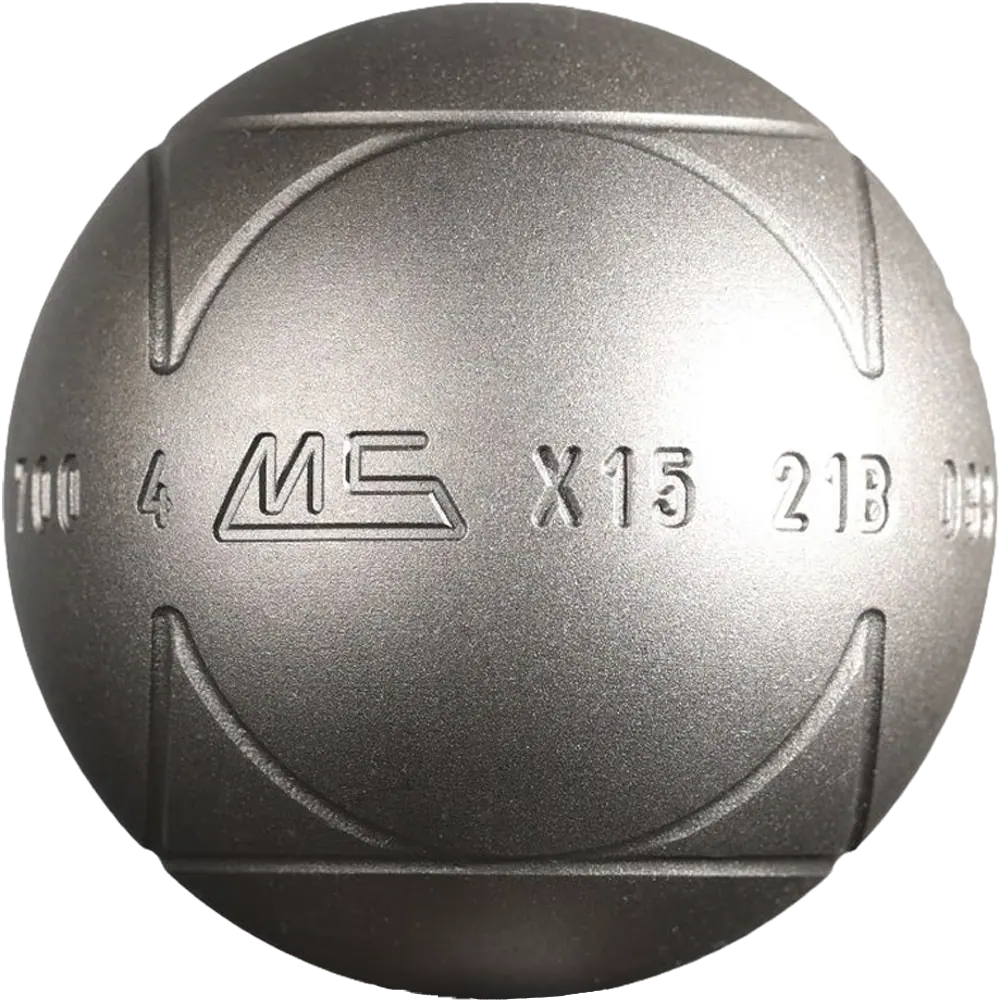
The satin finish is applied with steel beads. MS states plainly on its own product page that surface rust can appear between first use and the moment the finish wears off.
A buyer who expects stainless to mean nothing ever marks will be surprised. MS says its stainless boules do not rust and turn white with use, so the marking belongs to the finish rather than the steel.
The balance
Pros and cons
Pros
- Soft at 115 kg/mm2, the band MS credits with low rebound and softer recoil
- Patented internal anti-rebound ribs in a forged boule, a structural feature rather than a claim about steel
- Nine weights from 680 to 720 g in 5 g steps
- Chrome-nickel stainless, so no oiling
- About $219 in the United States for common sizes, and 202 euros direct from MS in France
- Striation pattern that MS says gives a good hold in the hand
Cons
- The $219 US price covers a few common sizes, and the rest of the range costs about $329 made to order
- MS warns that the bead-blasted finish can show surface rust in use until it wears away
- No 71 mm option at all, which rules out the smallest hands
- MS says soft boules at 110 or 115 kg/mm2 have a shorter life than semi-soft ones
- Two years of warranty, where MS gives its own 1PACT three
The score
How this review scores it
Alternatives
How it compares
| Specification | MS Pétanque STRX Inox | MS 120 | Toro Petank Inox Striated | La Boule Bleue Prestige Inox 110 |
|---|---|---|---|---|
| Material | Chrome-nickel stainless | Carbon steel | Stainless steel | Stainless steel |
| Hardness | 115 kg/mm2, soft | 120 kg/mm2, semi-soft | 120 kg/mm2, semi-soft | 110 kg/mm2, very soft |
| Finish and surface | Satin, striated | Gray finish | Tennis-ball striation | Satin, smooth or striated |
| Diameters | 72 to 76 mm | 71 to 76 mm | 71 to 76 mm | 71 to 80 mm |
| Weights | 680 to 720 g | 675 to 720 g | 670 to 720 g | 650 to 800 g |
| Maker’s role advice | Shooter and milieu | All positions | Milieu and pointer | Shooter |
| Price | About $219 in the US | About $134 in the US | About $270 in the US | About 270 euros in France |
The cheaper MS route
The MS 120 is the budget route to the same maker: firmer and carbon rather than stainless, with MS asking for a light film of oil after play. It costs about $134 in the United States, and MS does not list the anti-rebound ribs for it.
MS does put the rib technology in its carbon 1PACT at 120 kg/mm2. That boule carries a three-year warranty and needs oiling like any carbon set.
The stainless rivals
The Toro Petank Inox Striated is the direct US rival at about $270. It is firmer at 120 kg/mm2, and Toro recommends it for milieu players and pointers rather than shooters.
The La Boule Bleue Prestige Inox 110 is softer and covers far more sizes, up to 80 mm and 800 g. It costs about 270 euros in France and has to be imported.
Before you order
Buying advice
Check which sizes the lower price covers
The $219 price applies to a few common pairings between 72 and 74 mm, which covers many hands. Anything else is made to order at about $329.
Find your diameter first, then check the price for that exact pairing. The boule selector will tell you your diameter before you shop.
The 71 mm problem
The range starts at 72 mm, so a player who measures at 71 mm cannot use this boule and no weight choice compensates.
MS publishes weight guidance worth using across brands. Shooters mostly play 680 to 700 g, and pointers often go above 700 g, with 710 and 720 g common.
Expect the finish to change
Wipe the boules dry after wet play. That is the whole routine, and it limits the surface marking MS warns about.
Once the finish wears, bare chrome-nickel stainless shows through. The striations are cut into the boule itself, so they stay when the finish goes.
Warranty terms in writing
Two years covers manufacturing defects, not wear. Striations wearing down with use is wear.
Buying through a retailer rather than direct changes who handles a claim, so ask before ordering. The FIPJP lets a boule lose up to 15 g below its marked weight through play, and the equipment page covers the other rules a competition boule must meet.
Common questions
Questions about the MS Pétanque STRX Inox
How hard is the STRX Inox?
MS publishes 115 kg/mm2 and files it under tendre, soft. It is softer than the common semi-soft boules at 120 and firmer than the very soft boules at 110.
MS recommends it for shooters and milieu players.
What do the internal ribs do?
MS designed them to limit rebound and recoil, and calls the structure patented. They are inside the boule, not a surface feature.
The aim is soft behavior that comes from both the structure and the steel.
Can I buy it in the United States?
Yes. It sells for about $219 in a few common sizes and about $329 for other pairings made to order.
The lower price undercuts the Toro Inox Striated at about $270, the other striated stainless boule reviewed here.
Will it rust?
MS says its stainless boules do not rust, but warns that the satin finish, applied with steel beads, can show surface rust until it wears off.
Wiping the boules dry after damp play limits it. It is a surface effect, not damage.
Is 720 g too heavy?
Not for a milieu who points. MS’s guidance puts pointers above 700 g, with 710 and 720 g common, and shooters mostly at 680 to 700 g.
Weight should follow hand size and throwing style rather than a preference for heavy or light.
Is it approved for competition?
Yes. MS states that the FIPJP has approved the STRX, and the federation’s current label list names the maker, VMS Plot in Nogent.
Each boule carries the engraved weight, model and serial number the federation requires.