The numbers
Specifications
The hardness label varies, the number does not
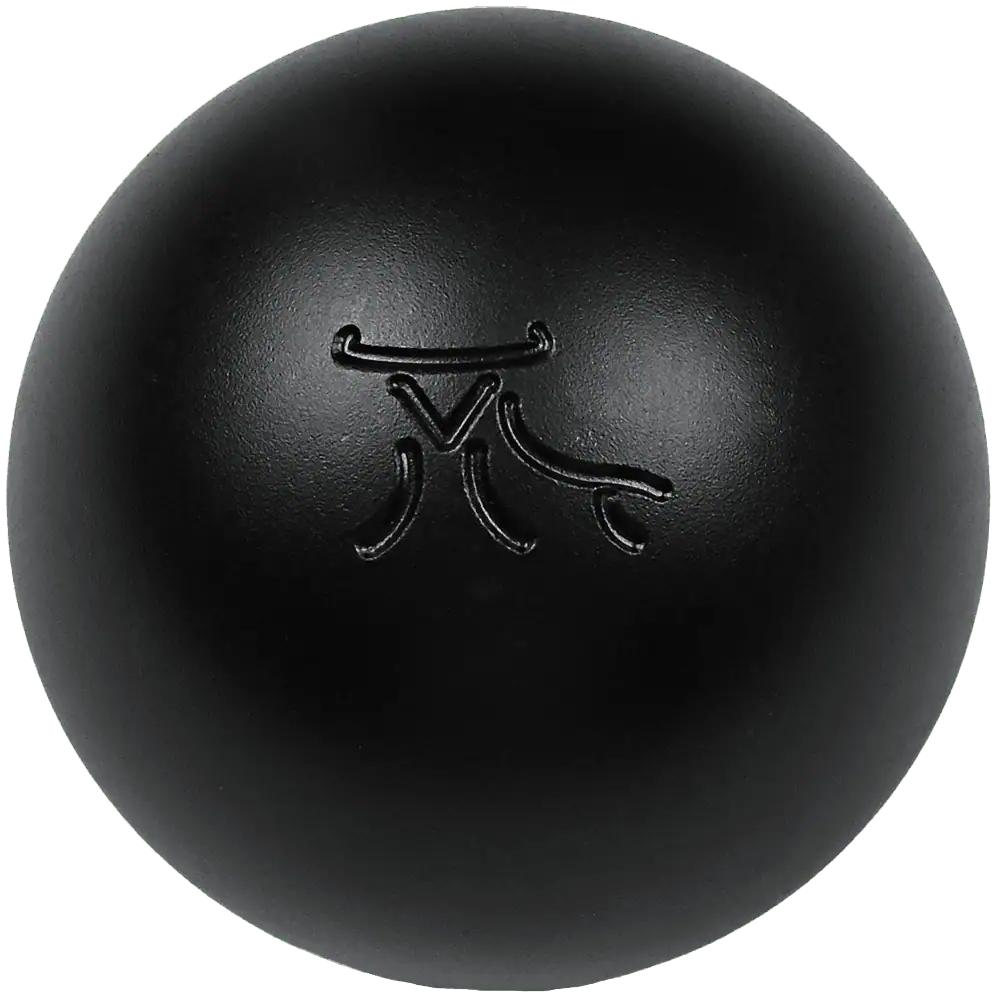
Toro files this boule under boules tendres, soft, while MS Pétanque labels its own 110 kg/mm2 carbon, the 2110, très tendre, very soft. Toro converts the figure to 36 HRC.
The federation’s homologation rules equate 110 daN/mm2 with their 35 HRC minimum. On that reading this boule sits at the floor, and on Toro’s reading it sits one point above.
Toro sells it to both roles
Toro’s own description says the smooth carbon convient aux pointeurs comme aux tireurs, suits both pointers and shooters. That is broader than the hardness alone would suggest.
MS Pétanque’s buying advice places 110 to 115 kg/mm2 with shooters, and that is how a boule this soft behaves. The maker’s line is the wider claim, and the number is the reliable one.
Pétanque, once a month
New reviews, price changes, club spotlights and events across the US, Canada and Mexico.
Free. One click to leave.
Suitability
Who it is for
Suits you if
- Shooting is most of what you do
- You throw between 680 and 710 g
- Wiping and oiling a boule is already a habit
- You want a set sold in the United States rather than an import
- Around $200 is your ceiling
Look elsewhere if
- Pointing is your job in the team
- You throw 720 g, which Toro offers in only two diameters
- Maintenance is the thing you always forget
- You expect the warranty to still exist in year two
In the hand
How it plays
What soft steel does on impact
The boule absorbs rather than rebounds, so a clean hit is far more likely to leave your boule near where the target sat.
The same property makes it settle quickly on packed ground instead of running on.
Shooting
That is where the money goes. Hit a boule square and yours tends to stay, which is the difference between a carreau and a shot that clears the head and leaves you nothing.
A hard boule gives back more of the impact, so the contrast is large. The shooting page covers the throw itself.
Pointing
Workable, not its strength. A soft boule settles fast, so you carry it closer to the target rather than rolling it in.
On loose gravel that helps, and on long flat ground a firmer boule is easier to judge. Reading the terrain decides which of those you are standing on.
Wear and maintenance
Soft steel marks sooner than hard steel, and a plain black finish shows every mark. That is cosmetic rather than structural, and it shows early.
It is carbon steel, so wipe it dry and oil it. The federation forbids any heat treatment after sale, so re-tempering a worn boule is not an option.
The balance
Pros and cons
Pros
- 110 kg/mm2 is the softest competition carbon on offer, and Toro publishes the figure
- Sold in the United States at about $204, so no import from France
- Federation approved, under the label TORO C
- Factory engraving costs 11 euros for up to three characters
Cons
- One-year warranty in Toro's terms, against two years on the MS 2110
- Carbon steel rusts without maintenance, and soft carbon marks early
- Toro's spec lists only 680 to 700 g, and 720 g exists in just two diameters
- The MS 2110 is the same 110 kg/mm2 and costs about $23 less in the United States
The score
How this review scores it
Alternatives
How it compares
| Specification | Toro Petank Carbon Smooth | MS Pétanque 2110 | Toro 119 | Toro Inox Striated |
|---|---|---|---|---|
| Material | Carbon steel | Carbon steel | Carbon steel | Stainless steel |
| Hardness | 110 kg/mm2, soft | 110 kg/mm2, very soft | 119 kg/mm2, semi-soft | 120 kg/mm2, semi-soft |
| Diameters | 71 to 76 mm | 71 to 76 mm | 71 to 76 mm | 71 to 76 mm |
| Weights offered | 660 to 720 g | 670 to 710 g | 670 to 720 g | 670 to 720 g |
| Maintenance | Oiling required | Oiling required | Oiling required | None |
| Warranty | 1 year | 2 years | 1 year | 1 year |
| US price | About $204 | About $181 | About $163 | About $270 |
The MS 2110
The MS 2110 is carbon steel at the same stated 110 kg/mm2, and French pétanque sites have reported for years that MS Pétanque forges the Toro carbon. Toro does not name its forge, but its sales terms give a company address in Nogent, the Haute-Marne town where MS makes its boules.
MS adds patented internal ribs meant to limit rebound and a two-year warranty. It runs about $181 in the United States, about $23 less than the Toro.
The two Toro siblings
The Toro 119 is about $41 cheaper and firmer at 119 kg/mm2, and Toro sells it to pointers and shooters alike. A player who points often will find it the better fit.
The Toro Inox Striated is about $66 more and needs no oiling, but at 120 kg/mm2 it is not a soft boule.
Before you order
Buying advice
Weight decides more than finish
Toro’s spec text stops at 700 g, and its order form reaches 720 g in only two diameters, 73 and 76 mm. A pointer who throws heavy has little to choose from.
MS Pétanque’s buying advice puts shooters at 680 to 700 g, middle players at 680 to 720 g and pointers at 710 to 720 g. The boule selector works through the same question.
Standard sizes against a direct order
The going rate of about $204 covers the common sizes that reach the United States. Anything else means ordering from Toro in France, which ships worldwide.
Toro’s site shows North American buyers about 129 euros a set without French VAT, before shipping. Outside the European Union the buyer is the importer and pays any duties on arrival.
Budget for maintenance
Carbon steel needs oiling, and soft steel that marks early needs the habit most. A microfiber cloth and light oil is the whole routine.
Never store boules in a car trunk. Temperature swings cause condensation, and condensation on carbon steel is rust.
Engraving is cheap from the factory
Toro charges 11 euros for one to three characters and 17 euros for four to fourteen, ordered with the boules.
The federation’s rules forbid altering the maker’s mark, the label or the three-digit weight after sale, and your own initials or a symbol are permitted on top. The equipment page covers the full marking rule.
Common questions
Questions about the Toro Petank Carbon Smooth
Is this boule soft, very soft or semi-soft?
The measurement is 110 kg/mm2, which Toro converts to 36 HRC. Toro files it under soft, while MS Pétanque calls its own 110 kg/mm2 boule very soft.
The number is the thing to trust. Either label puts it at the soft end of what the federation approves.
Does MS Pétanque make Toro boules?
Toro does not say so. French pétanque sites have reported for years that MS forges the Toro carbon, and Toro’s sales terms give a company address in Nogent, the Haute-Marne town where MS makes its boules.
That does not make it an MS 2110 under another name. Toro’s pages say nothing about the patented internal ribs MS markets on the 2110.
How soft is a boule allowed to be?
The federation sets the minimum at 35 HRC, which its rules equate with 110 daN/mm2, and caps hardness at 55 HRC for safety reasons.
Toro quotes this boule at 36 HRC. It sits at the floor or one point above it, depending on the conversion.
Which weights can I get?
Toro’s spec text lists 680 to 700 g in 10 g steps across six diameters, 71 to 76 mm. Its order form goes wider, 660 to 720 g, though the extremes exist only in some diameters.
Confirm an unusual pairing before ordering. The Inox Striated review covers Toro’s stainless option at the same diameters.
How long will a soft carbon boule last?
It will mark more than a hard boule, and the black finish shows it. The federation allows wear of up to 15 g below the marked weight before a boule is out of specification.
Heat treatment after sale is forbidden, so a genuinely worn set is replaced rather than reconditioned.
Smooth or striated?
Smooth is easier to clean. Toro’s striated carbon carries tennis-ball seams for more grip in the hand, at the same 110 kg/mm2.
It runs about $214 in the United States, $10 more than the smooth. Neither plays better; it is a preference.